The Renaissance Revival: Integrating Nicolaus Kesler Type into Modern Design Workflows
In the contemporary landscape of digital and print design, the demand for typography that bridges historical authenticity with modern legibility is more pronounced than ever. As designers move away from the sterile uniformity of early 20th-century sans-serifs and seek to inject character, warmth, and narrative depth into their work, the late Gothic and early Humanist typefaces have seen a significant resurgence. Among these, the Nicolaus Kesler font family stands out as a sophisticated solution for creators who require both aesthetic distinction and functional clarity. Derived from the original punchcuts used by Nicolaus Kesler, a prominent printer of incunabula in Basel, Switzerland, this typeface offers a unique blend of elegance and readability that serves a wide array of professional needs.
To understand the value of this specific typeface, one must first appreciate the historical context from which it emerges. Nicolaus Kesler was not merely a typesetter; he was a pivotal figure in the dissemination of knowledge during the incunable period (roughly 1450–1500). Operating in Basel, a city that became a hub for printing and humanist scholarship, Kesler produced numerous ecclesiastical works, Bibles, and notably, an edition of the Golden Legend. His work represented the transition from the dense, difficult-to-read blackletter styles of the early press to more open, readable forms that facilitated the spread of literacy and learning. The font derived from his work captures this transitional moment, offering a visual language that feels ancient yet accessible.
Historical Provenance and Typographic Characteristics
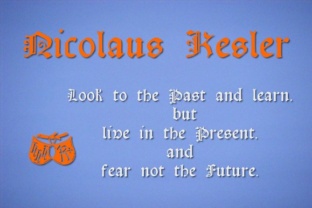
The core strength of the Nicolaus Kesler typeface lies in its fidelity to the original prints while being optimized for contemporary screens and high-resolution output. Kesler’s original punches were crafted to balance the ornate nature of late medieval printing with the emerging humanist desire for clarity. This duality is preserved in the modern digital revival. The letters possess a distinct personality; they are fancy and elegant, evoking the gravitas of a 15th-century manuscript or printed folio, yet they retain a surprisingly easy-to-read property that prevents them from becoming purely decorative.
This balance is critical for long-form reading. Many display serifs or historical revivals become fatiguing when used in body text because their x-heights are too small or their counters (the enclosed spaces within letters like 'e' or 'a') are too tight. The Kesler variant addresses this by maintaining generous proportions. The contrast between thick and thin strokes is present but controlled, ensuring that the eye can glide across lines of text without stumbling over overly dramatic flourishes. For educators and researchers publishing academic papers, books, or journals, this means that the typography supports the content rather than competing with it.
Furthermore, the inclusion of over 900 glyphs makes this font versatile enough for complex linguistic requirements. It supports extended Latin characters, allowing for use in European languages beyond English. However, what truly sets this package apart for specialized users is the inclusion of historical abbreviations common in incunable printing. These ligatures and short-hands allow historians, theologians, and publishers of classic literature to reproduce texts with authentic typographic accuracy. When editing a facsimile of a 15th-century religious text, the ability to insert the correct abbreviation for "et" or "que" adds a layer of scholarly rigor that standard fonts cannot provide.
Practical Applications Across Industries
The versatility of the Nicolaus Kesler font allows it to be deployed across various sectors, each leveraging its unique characteristics for different ends. For brand identity specialists, the font offers a way to communicate heritage, trust, and sophistication. A law firm, a university, or a luxury hospitality brand might choose this typeface to signal stability and timelessness. The voided outlined version included in the package provides additional creative flexibility, allowing designers to create striking logos, headers, or environmental graphics where negative space plays a crucial role.
- Publishing and Editorial Design: Magazines and literary journals often use this font for pull quotes, chapter headings, and sometimes even body text in special editions. Its ability to convey authority makes it ideal for opinion pieces and investigative journalism that seeks to establish credibility.
- Ecclesiastical and Academic Publishing: Given Kesler’s history of printing Bibles and the Golden Legend, this typeface is naturally suited for religious institutions and theological departments. It respects the gravity of sacred texts while remaining legible for modern congregations or students.
- Event and Exhibition Branding: Museums and art galleries frequently host exhibitions on the Renaissance or the history of the book. Using a typeface directly linked to the incunable era creates a cohesive visual narrative that enhances the visitor experience before they even read the exhibit labels.
- Fashion and Lifestyle Brands: High-end fashion houses often draw inspiration from historical aesthetics. The "fancy and elegant" nature of the font aligns well with branding that aims to evoke craftsmanship, tradition, and artisanal quality.
Technical Features and Usability
From a technical standpoint, the Nicolaus Kesler font package is designed to meet the rigorous demands of modern production workflows. The presence of a voided outlined version is particularly noteworthy. In graphic design, outline versions are often used for large-scale applications such as signage, billboards, or textile patterns. They allow for creative manipulation of weight and scale without losing the structural integrity of the letterforms. This feature expands the utility of the font beyond traditional page layout into spatial design and product development.
The extensive glyph set also ensures compatibility with diverse design software environments. Whether working in Adobe InDesign for multi-page layouts, Illustrator for vector-based logo creation, or Figma for digital interface prototyping, designers will find the font behaves predictably. The historical abbreviations are mapped to appropriate OpenType features, meaning they can be accessed easily through stylistic sets or contextual alternates. This reduces the need for manual substitution, streamlining the workflow for designers who need to maintain high standards of typographic correctness under tight deadlines.
Additionally, the font’s construction takes advantage of modern hinting techniques. While historical typefaces can sometimes appear jagged or blurry at small sizes on low-resolution screens, the Nicolaus Kesler revival includes adjustments to ensure crisp rendering at smaller point sizes. This is essential for web designers who wish to use the font for headlines or navigation elements without sacrificing performance or visual quality. The balance between the "fancy" display qualities and the "easy to read" body text properties means that a single font family can often suffice for an entire project, reducing file bloat and ensuring visual consistency.
Considerations for Implementation
While the Nicolaus Kesler font offers numerous advantages, its implementation requires thoughtful consideration. Because of its strong historical character, it is not a neutral background typeface. It carries a voice—a voice that is formal, slightly archaic, and distinctly European. Therefore, it should be used with intention. Pairing it with a clean, neutral sans-serif for secondary information or UI elements can create a compelling hierarchy that guides the reader’s eye effectively.
Designers should also be mindful of the cultural connotations associated with the font. As it is derived from ecclesiastical and scholarly works, it may evoke specific associations with religion, academia, or tradition. For brands operating in secular, fast-paced, or highly innovative industries, using this font for primary communication might send mixed signals unless carefully balanced with other visual elements. It is best employed when the brand story explicitly references heritage, craftsmanship, or deep subject matter expertise.
Another consideration is the density of the text. While the font is readable, its ornamental roots mean that extremely long blocks of text might benefit from increased line height and spacing compared to more utilitarian fonts. By giving the letters room to breathe, designers can fully appreciate the nuances of the cut, from the subtle bracketing of the serifs to the rhythm of the word spacing. This attention to detail transforms reading from a passive activity into an aesthetic experience.
The Future of Historical Fonts in Digital Media
The trend toward using historically inspired typefaces is unlikely to wane. As digital interfaces become increasingly saturated with generic corporate designs, there is a growing appetite for typography that tells a story. The Nicolaus Kesler font represents a bridge between the past and the future, allowing modern creators to tap into centuries of typographic evolution. By providing access to the tools used by printers like Nicolaus Kesler, we democratize the ability to produce materials that feel handcrafted and significant.
For professionals, hobbyists, and educators alike, this font offers more than just a set of letters; it offers a connection to the history of communication itself. Whether you are designing a wedding invitation that echoes Renaissance elegance, creating a textbook on medieval history, or developing a brand identity for a boutique coffee roaster that values old-world methods, the Nicolaus Kesler typeface provides a robust, elegant, and historically grounded foundation. Its combination of over 900 glyphs, historical abbreviations, and dual-weight options ensures that it remains a relevant and powerful tool in the designer’s arsenal, proving that the innovations of Basel’s early printers continue to inform and inspire our visual culture today.