Revitalizing Vintage Aesthetics: The Strategic Application of Halberd Typeface in Modern Design
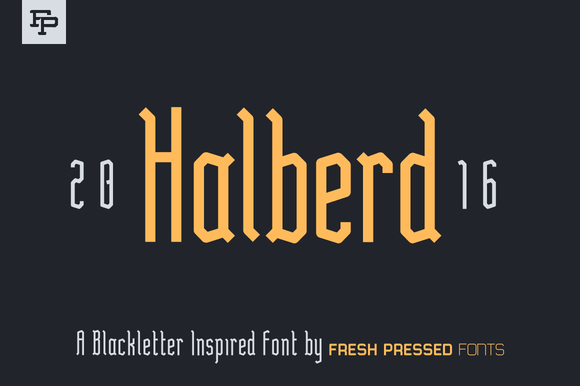
In the rapidly evolving landscape of visual communication, the tension between historical authenticity and contemporary minimalism often defines successful design. For decades, blackletter typefaces—often colloquially referred to as Gothic or Old English—have carried a heavy cultural weight. They are instantly recognizable, evoking associations with tradition, authority, and medieval craftsmanship. However, their dense structures and complex serifs can sometimes feel archaic or difficult to read in digital-first environments. Enter Halberd, a typeface that navigates this delicate balance by offering a modern reinterpretation of classic blackletter forms. By integrating creative adjustments into its architecture, Halberd brings a sleek, updated look to the elegant and vintage feel of traditional gothic scripts, making it a versatile tool for designers seeking depth without sacrificing legibility.
The Evolution of Blackletter in Contemporary Typography
To understand the value proposition of Halberd, one must first appreciate the lineage of the fonts it emulates. Blackletter originated in the 12th century and dominated Western calligraphy until the mid-20th century. Its defining characteristic is the high contrast between thick vertical strokes and thin horizontal lines, creating a textured, almost woven appearance. While historically significant, pure blackletter faces often struggle with scalability and accessibility on small screens or low-resolution prints.
Modern typographic design has shifted towards clarity and speed of reading. This shift necessitated a reimagining of older styles. Designers began to loosen the constraints of strict historical accuracy, introducing wider counters (the enclosed spaces within letters) and smoother curves. Halberd exemplifies this evolution. It retains the dramatic flair and structural integrity of its ancestors but refines them for current aesthetic standards. The result is a font that feels both timeless and timely, capable of commanding attention while remaining accessible to a broad audience.
Creative Adjustments and Structural Integrity
What sets Halberd apart from other neo-blackletter fonts is its specific approach to letterform construction. The typeface introduces subtle variations in stroke weight and terminal shapes that prevent the text from feeling overly rigid. These creative adjustments serve a dual purpose: they enhance visual interest and improve readability. For instance, the uppercase letters in Halberd feature sharp, aggressive angles that convey strength and precision, while the lowercase letters maintain a more fluid rhythm. This duality allows the font to function effectively in headlines where impact is paramount, as well as in subheads where context is needed.
Furthermore, the inclusion of international language support ensures that Halberd is not limited to English-speaking markets. With extensive glyph coverage, designers can incorporate diacritical marks and special characters seamlessly. This global readiness is crucial for brands operating in multicultural environments or targeting international audiences who expect their native scripts to be rendered with the same stylistic care as Latin characters.
Practical Applications Across Industries
The versatility of Halberd makes it suitable for a wide array of applications. Its ability to bridge the gap between heritage and modernity allows it to fit into diverse branding strategies. Below are several key areas where Halberd demonstrates its utility.
Branding and Logo Design
For businesses looking to establish a strong, memorable identity, Halberd offers a distinctive voice. Logos utilizing this typeface can evoke feelings of trust, history, and premium quality. Consider a craft brewery or an artisanal bakery; these industries often rely on narratives of tradition and handcrafted excellence. A logo set in Halberd immediately communicates these values without the need for additional explanatory graphics. Similarly, tech startups in the cybersecurity or blockchain space might use Halberd to project sophistication and robust security, leveraging the font’s "armor-like" aesthetic to suggest protection and reliability.
Packaging and Product Labeling
In the retail sector, shelf appeal is critical. Packaging design relies heavily on typography to capture consumer attention amidst clutter. Halberd’s bold presence ensures that product names stand out. Whether applied to luxury cosmetics, gourmet food items, or limited-edition apparel, the font adds a layer of perceived value. The intricate details of the blackletter style draw the eye, encouraging closer inspection. Moreover, the font’s compatibility with various layout sizes means it can adapt to small labels on bottles or large banners on shipping containers without losing its character.
Digital Media and Web Design
While blackletter was traditionally reserved for print, digital platforms have embraced it for specific use cases. Halberd shines in hero sections of websites, landing pages, and social media graphics. When used sparingly for headlines, it creates a striking visual hierarchy. Educators and researchers might use it for presentation slides when discussing historical topics, art history, or literature, providing a thematic consistency that enhances the educational experience. Hobbyists and content creators also benefit from its unique style, using it to differentiate their channels or blogs from the sea of sans-serif standardizations.
- Posters: Concert posters, event announcements, and festival branding often require fonts that convey energy and genre-specific vibes. Halberd fits perfectly within rock, metal, or medieval-themed events.
- Flyers: Promotional materials for local businesses, such as pubs, antique shops, or tattoo parlors, gain credibility and atmosphere through the use of authentic-looking yet modern typography.
- Signage: Outdoor and indoor signage benefits from the high contrast of Halberd, which remains visible from a distance due to its strong structural lines.
Advantages for Design Professionals and Consumers
For graphic designers, working with Halberd offers both creative freedom and technical ease. The font comes with plenty of supporting glyphs, including ligatures, ornaments, and alternate characters. These features allow for greater customization, enabling designers to create bespoke typographic treatments without needing to resort to manual vector manipulation. This efficiency is particularly valuable in fast-paced agency environments where turnaround times are tight.
From a consumer perspective, the presence of Halberd in a brand’s visual identity signals attention to detail. Consumers are increasingly discerning, recognizing when a brand invests in high-quality assets. A well-executed design using Halberd suggests that the company cares about aesthetics and user experience. This perception can translate into higher engagement rates and improved brand loyalty. Furthermore, the font’s modern twist prevents it from feeling dusty or outdated, ensuring that the brand remains relevant in a changing market.
Considerations for Implementation
Despite its strengths, there are considerations to keep in mind when incorporating Halberd into projects. Like all blackletter-inspired fonts, it should be used judiciously. Large blocks of body text in Halberd can fatigue the reader and hinder comprehension. Best practices dictate using it for short phrases, titles, and emphasis rather than extended paragraphs. Pairing Halberd with clean, simple sans-serif or serif fonts for body copy creates a balanced composition. The contrast between the ornate headline and the readable body text guides the viewer’s eye effectively, enhancing the overall usability of the design.
Additionally, color choice plays a significant role in how Halberd is perceived. Dark backgrounds with light text can amplify the font’s dramatic effect, while light backgrounds with dark text offer a more classic, scholarly feel. Designers should experiment with spacing (kerning and tracking) to ensure that the dense letterforms do not appear too cramped. Proper spacing allows the unique shapes of each character to breathe, maximizing their visual impact.
The Future of Heritage Fonts in Digital Spaces
As we move further into an era dominated by screen-based interaction, the demand for fonts that offer personality and distinction continues to grow. Generic, neutral typefaces are becoming less effective at cutting through the noise. Halberd represents a broader trend of reviving historical styles with a modern lens. This trend is not merely nostalgic; it is strategic. By combining the emotional resonance of the past with the functional requirements of the present, fonts like Halberd provide a powerful tool for storytelling.
Educators and researchers will find value in Halberd’s ability to contextualize historical subjects accurately yet accessibly. Hobbyists and artists can explore new dimensions of expression by mixing traditional forms with digital techniques. Business owners can leverage the font’s authoritative tone to build trust and recognition. Ultimately, Halberd serves as a testament to the enduring power of well-crafted typography. It proves that even centuries-old design principles can be adapted to meet the needs of today’s dynamic visual landscape.
Conclusion
Halberd stands as a sophisticated solution for designers seeking to infuse their work with character and history. Its blend of creative adjustments, international support, and versatile application makes it an invaluable asset in any designer’s toolkit. Whether used for a bold logo, an elegant packaging label, or an engaging digital poster, Halberd delivers a modern take on the classic blackletter aesthetic. By understanding its strengths and applying it thoughtfully, professionals across various fields can create designs that resonate deeply with audiences, bridging the gap between heritage and innovation.