Boxise: The Blackletter Typeface That Redefines Readability in Modern Design
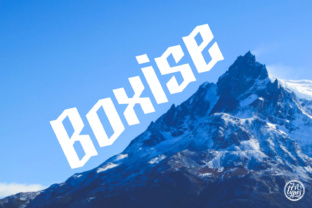
In the world of typography, few styles command as much visual weight and historical gravity as blackletter. Often associated with medieval manuscripts, Gothic architecture, and heavy metal album covers, this script style is traditionally defined by its density, complexity, and often, its difficulty to read at scale. However, a significant shift has occurred in the typographic landscape with the introduction of Boxise, a unique font created by designer Situjuh Nazara. Boxise challenges the conventional wisdom that ornate, historical typefaces must sacrifice legibility for aesthetic impact.
This article explores the distinctive characteristics of Boxise, its surprising utility across various design mediums, and why it has become a preferred choice for professionals seeking to blend historical gravitas with modern clarity. From branding to event invitations, understanding how to leverage this specific blackletter style can elevate visual communication projects.
The Anatomy of Boxise: Bridging History and Modernity
To understand why Boxise stands out, one must first appreciate the tension inherent in blackletter design. Traditional blackletter fonts are characterized by their vertical rhythm, sharp angles, and intricate interplay of thick and thin strokes. While visually striking, these features often create "visual noise" when used for body text or smaller sizes, leading to eye strain and reduced comprehension for the reader.
Situjuh Nazara’s creation addresses this core limitation head-on. Boxise retains the authentic silhouette and structural integrity of classic blackletter but simplifies the internal geometry. By reducing unnecessary flourishes and optimizing the spacing between characters, Nazara has engineered a typeface that feels familiar to those who know calligraphy yet remains accessible to contemporary eyes. This balance is not accidental; it is the result of deliberate design choices aimed at maximizing readability without compromising stylistic identity.
The font’s name, "Boxise," itself hints at its geometric underpinnings. Unlike the organic, flowing curves found in some humanist scripts, Boxise embraces a more structured, almost architectural approach to letterforms. This gives the font a sturdy, reliable appearance that works exceptionally well in contexts where stability and authority are desired.
Why Legibility Matters in Decorative Typography
For decades, designers faced a binary choice when incorporating blackletter into their work: use it strictly for large-scale display purposes like logos and headers, or risk creating unreadable clutter. Boxise disrupts this paradigm. Its enhanced legibility opens up new avenues for application that were previously reserved for sans-serif or serif typefaces.
Visual Hierarchy and Scannability
In digital and print media, users scan content before reading it deeply. A highly decorative font can interrupt this scanning process if the letters are too complex. Boxise mitigates this issue. Its clear counter-spaces (the open areas inside letters like 'o', 'e', and 'a') allow the eye to move smoothly from one character to the next. This makes it suitable not just for headlines, but for short paragraphs, captions, and menu items where quick recognition is essential.
Brand Recognition
Legibility also plays a crucial role in brand recall. If a logo is too difficult to decipher, consumers may struggle to remember the brand name. Boxise provides the distinctiveness of a custom blackletter mark while ensuring that the wordmark remains instantly recognizable. This is particularly valuable for businesses that want to evoke tradition, craftsmanship, or heritage without appearing archaic or inaccessible.
Practical Applications Across Industries
The versatility of Boxise stems from its ability to adapt to different tones and industries. Below are several key areas where this font demonstrates exceptional value.
Branding and Logo Design
For brands in the craft beer industry, artisanal bakeries, boutique hotels, or law firms, projecting an image of established quality is vital. Boxise offers a sophisticated alternative to generic gothic fonts. Its clean lines ensure that logos remain scalable and effective across various media, from business cards to large billboard signage. The font’s robust structure prevents distortion when resized, maintaining its integrity whether viewed on a mobile screen or printed on a storefront window.
Event Invitations and Stationery
Weddings, galas, and formal corporate events often rely on elegant typography to set the mood. While traditional calligraphy is beautiful, it can be challenging for guests to read quickly. Boxise serves as an excellent middle ground. It conveys formality and celebration through its historical roots but ensures that details such as dates, times, and locations are communicated clearly. This reduces anxiety for attendees trying to parse important information from decorative elements.
Apparel and Merchandise
The fashion industry frequently borrows from subcultural aesthetics, including punk, rock, and streetwear. Blackletter has long been a staple in these genres. However, poorly designed text on clothing can look cheap or messy. Boxise’s precise construction allows for cleaner prints on t-shirts, hoodies, and tote bags. The font looks intentional and polished, appealing to consumers who appreciate graphic design nuances even in casual wear.
Menus and Packaging
In the hospitality and food sectors, menus are functional documents that need to guide the customer’s decision-making process. Using a highly decorative font for dish names can hinder this process. Boxise allows restaurants to use thematic typography for section headers (like "Starters" or "Desserts") while keeping the actual item descriptions readable. Similarly, product packaging for premium goods—such as chocolate bars, coffee blends, or cosmetics—can benefit from the font’s ability to add a touch of luxury without obscuring product information.
Designing with Boxise: Best Practices and Considerations
While Boxise is designed for high legibility, effective typography always requires thoughtful implementation. Here are some guidelines for designers working with this typeface.
- Pairing with Complementary Fonts: Because Boxise is a strong display font, it pairs well with simple, neutral typefaces for body text. A clean sans-serif or a classic serif can provide the necessary contrast, allowing Boxise to shine in headings without overwhelming the layout.
- Tracking and Leading: Even with improved legibility, blackletter fonts can feel cramped if letters are too close together. Increasing the tracking (letter-spacing) slightly can enhance the airy, refined feel of Boxise, making it easier to read and more aesthetically pleasing.
- Color Contrast: To maximize readability, ensure high contrast between the text and background. Dark gray or black text on white or cream backgrounds works best. Avoid using Boxise in low-contrast combinations, such as dark brown on black, which can obscure the font’s detailed structure.
- Scale Sensitivity: While Boxise is more readable than traditional blackletters, it is still optimized for display sizes. Avoid using it for long-form body copy. Reserve it for titles, pull quotes, labels, and short phrases to maintain its impact and usability.
The Psychological Impact of Blackletter in Modern Contexts
Typography is not just about communication; it is about emotion. Blackletter evokes feelings of history, seriousness, and authenticity. In an era where digital content is often perceived as ephemeral and disposable, using a font like Boxise can lend a sense of permanence and value to a project.
For educators and researchers, using Boxise in academic posters or conference materials can signal a respect for tradition while acknowledging modern standards of accessibility. For hobbyists and creators, it offers a way to express individuality through design without sacrificing professional polish. The font acts as a bridge between the past and present, allowing users to tap into the cultural resonance of historical scripts while adhering to contemporary usability standards.
Comparing Boxise to Other Blackletter Options
When selecting a typeface, it is helpful to compare options. Many free or standard blackletter fonts available online suffer from inconsistent stroke weights, poor kerning, or overly aggressive styling that hinders readability. Some may appear jagged or pixelated at smaller sizes.
Boxise distinguishes itself through its consistency and refinement. Where other fonts might prioritize dramatic flair over function, Boxise prioritizes balance. It does not shout; it communicates with confidence. This subtlety is what makes it suitable for a broader range of applications, from subtle branding elements to bold headline statements. Designers looking for a tool that offers both aesthetic power and practical utility will find Boxise to be a superior choice compared to more rigid or ornate alternatives.
Future Trends in Historical Revival Fonts
We are currently witnessing a resurgence of interest in historical typefaces, driven by a desire for authenticity in a digital world. However, the trend is shifting away from pure reproduction toward adaptation. Designers are increasingly looking for fonts that reinterpret historical styles for modern screens and diverse media.
Boxise is a prime example of this trend. It respects the source material but adapts it for current needs. As remote work, digital marketing, and personalized consumer experiences continue to grow, the demand for versatile, readable, yet distinctive fonts will likely increase. Fonts that can perform well in both physical and digital environments, like Boxise, are positioned to become staples in design toolkits worldwide.
Conclusion
Situjuh Nazara’s Boxise represents a significant evolution in the blackletter genre. By solving the longstanding problem of legibility in decorative scripts, it has expanded the potential uses of this historic style. Whether you are a business owner looking to strengthen your brand identity, a designer crafting an elegant invitation, or a creator seeking to add depth to your apparel designs, Boxise offers a compelling solution.
Its success lies in its ability to honor the past while serving the present. It proves that beauty and functionality are not mutually exclusive. For anyone seeking to incorporate the gravitas of blackletter into their work without compromising on clarity, Boxise stands out as a premier choice. As design trends continue to evolve, the relevance of such well-crafted, adaptable typefaces will only grow, cementing Boxise’s place in the modern typographic canon.