Konrad Kachelofen: A Historic Typeface for Modern Design
In the bustling intellectual hub of late 15th-century Leipzig, Konrad Kachelofen operated a printing press that was as much a social gathering spot as it was a workshop. By around 1483, he had established himself as a significant figure in early typography, producing works by contemporary authors and classical texts. His shop was unique, featuring a wine bar alongside his bookstore and press, creating an atmosphere where ideas flowed as freely as the wine. Today, we look at a digital revival of this historical legacy—a typeface inspired by the specific letterforms Kachelofen used, offering designers a bridge between medieval craftsmanship and modern digital clarity.
The Historical Context of Kachelofen’s Press
To understand the aesthetic value of the font named after him, one must first appreciate the environment in which it was born. Kachelofen did not merely print books; he curated knowledge. His acquisition of an unusually large amount of typefaces for his time suggests a printer who understood the visual hierarchy of text and the importance of variety in communication. He printed both new, controversial works and established classics, requiring a versatility that went beyond standard Gothic or Roman styles.
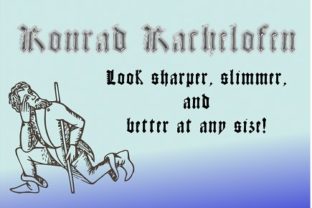
The specific typographic reference for this modern interpretation is Typ.11 340G GfT510 Gesamtkatalog der Wiegendrucke. This catalog entry serves as the primary source material, grounding the digital font in verified historical artifacts. While similar to Proportional Lime’s “Kachelofen font,” this particular iteration has been refined for contemporary needs. The most notable distinction lies in its application: this face was designed solely for titles and section headings. Its sharper, clearer appearance at large point values makes it ideal for grabbing attention, distinguishing it from body text fonts that prioritize readability over dramatic impact.
Design Characteristics and Technical Nuances
For those with an eye for detail, the differences between this typeface and its predecessors are subtle but significant. The entire minuscule (lowercase) set is slimmer, providing a more elegant and less heavy footprint on the page. This slimness allows for tighter tracking and kerning without sacrificing legibility, a crucial feature for dense layouts or narrow columns.
The majuscule (uppercase) set features different style glyphs that enhance its character. These variations give the font a distinct personality, avoiding the generic feel of many modern serif displays. The sharpness of the serifs and the contrast between thick and thin strokes create a visual rhythm that is engaging to the eye. Because it is optimized for large point sizes, it retains its structural integrity even when scaled up for banners, posters, or website headers. It does not blur or lose definition, ensuring that the message remains crisp regardless of the viewing distance.
Why Different Audiences Should Care
The relevance of a historical typeface like Kachelofen extends across various professional fields. Here is how different groups might evaluate its utility:
Designers and Creative Directors
For creative professionals, the appeal lies in authenticity and differentiation. Using a typeface rooted in the history of the German Renaissance adds a layer of narrative depth to a project. It signals an appreciation for craft and tradition, which can elevate brand identity for companies in publishing, education, heritage tourism, or artisanal goods. The slim lowercase and distinctive uppercase allow for sophisticated pairing with simpler sans-serifs or clean body text fonts.
Educators and Publishers
Academic publishers and educators often deal with texts that require clear hierarchy. Section headings need to be authoritative yet inviting. Kachelofen’s sharp appearance provides immediate visual separation between chapters, sections, and sub-sections. For textbooks, historical journals, or literary anthologies, this font can reinforce the subject matter’s gravity and timelessness. It helps guide the reader’s eye through complex information structures without overwhelming them.
Small Business Owners and Marketers
Entrepreneurs looking to establish a premium or boutique image may find value in this typeface. Whether for a café menu, a wedding invitation suite, or a luxury product label, the historical connotation suggests quality and longevity. In marketing materials, using Kachelofen for headlines can create a memorable visual hook that stands out against the sea of modern, minimalist designs. It communicates stability and expertise.
Hobbyists and Hobby Printers
For hobbyists engaged in letterpress printing or calligraphy, understanding the original forms is essential. This digital version offers a convenient way to experiment with historical aesthetics before committing to physical plates or blocks. It allows for rapid prototyping of designs that honor traditional methods while utilizing modern software workflows.
Practical Applications and Use Cases
- Editorial Design: Use for chapter titles, pull quotes, and sidebars in novels or non-fiction books. The slimminess of the lowercase ensures it doesn’t compete with the body text.
- Branding: Ideal for logos or wordmarks for businesses emphasizing heritage, such as distilleries, bookstores, or law firms.
- Digital Headers: On websites, use for hero sections or navigation menus where space is limited but impact is needed. The clarity at large sizes ensures fast loading times and quick readability.
- Event Posters: For cultural events, conferences, or exhibitions, the font’s historical weight adds gravitas to the announcement.
Evaluating Fit for Your Project
Before adopting Kachelofen, consider your specific goals. If you need a versatile font for long-form reading, this is not the right choice. Its strength lies in display use—titles, headings, and short phrases. Evaluate whether your project benefits from a historical, slightly ornate aesthetic. If your goal is modern minimalism or tech-forward simplicity, a geometric sans-serif might serve you better. However, if you aim to evoke warmth, history, or intellectual rigor, Kachelofen offers a nuanced tool.
Consider the pairing potential. Because of its distinctive character, it pairs well with neutral, understated fonts. Let the Kachelofen shine in the headlines while letting simpler type handle the details. This balance ensures that the design remains accessible and readable, adhering to best practices in user experience design.
Conclusion
Konrad Kachelofen was more than just a printer; he was a curator of culture in Leipzig. His legacy lives on in the typefaces that bear his name, offering modern creators a tangible link to the past. By choosing a font that prioritizes clarity, elegance, and historical accuracy, you make a statement about the value of your content. Whether you are designing a book cover, a brand identity, or a website header, Kachelofen provides a timeless solution for those who wish to stand out through substance and style. It is a reminder that good design is not just about following trends, but about understanding the roots of visual communication.