Mastering Gothic Elegance: Why Anabella Is the Perfect Blackletter Font for Modern Branding
In the vast landscape of digital typography, where clean sans-serifs and minimalist serifs often dominate the screen, there remains a powerful niche for typefaces that command attention through history, texture, and sheer visual weight. Among these, Anabella stands out as a premier choice for designers and brand managers seeking to infuse their projects with a sense of timeless authority and artistic flair. As a beautiful blackletter Gothic font, Anabella is not merely a collection of letters; it is a statement piece designed to add tons of nuance and style to your work.
Whether you are designing a logo for a heritage brand, creating marketing materials for an event, or simply looking to elevate the aesthetic of a print publication, understanding how to leverage a typeface like Anabella can be the difference between a forgettable design and an unforgettable one. This article explores the unique characteristics of Anabella, its practical applications in modern branding, and why this specific font excels in displays and logotype creation.
The Anatomy of Anabella: More Than Just Old-Fashioned Style
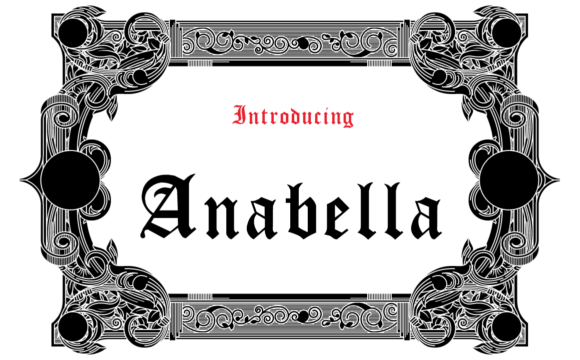
To appreciate Anabella, one must first understand the category it belongs to: blackletter. Often referred to historically as Gothic script or Fraktur, blackletter typefaces originated in Western Europe during the 12th century. They were characterized by dense, angular forms that mimicked the calligraphy of the time. However, Anabella is not a strict historical reproduction. It is a contemporary interpretation that retains the dramatic flair of its ancestors while adapting to modern design sensibilities.
Anabella features sharp angles, intricate details, and a high-contrast structure that creates a striking visual rhythm. Unlike some older blackletter fonts that can feel cluttered or difficult to read at small sizes, Anabella is engineered with clarity in mind. Its strokes are balanced, ensuring that while the font is ornate, it remains legible when used correctly. This balance is crucial for branding projects, where readability and recognition are paramount.
When you choose Anabella, you are choosing a font that communicates several key attributes:
- Tradition and Authority: The Gothic roots evoke a sense of history, stability, and established expertise.
- Artistic Sophistication: The intricate details signal that care has been taken in the design process.
- Boldness: The heavy visual weight of the letters ensures they stand out against white space or busy backgrounds.
Why Anabella Excels in Logotype Design
A logotype, or wordmark, is the textual component of a logo. It relies entirely on typography to convey the brand’s personality. This is where Anabella truly shines. Because the font is so distinct, it can serve as the primary identifier for a brand without needing additional graphic elements. For businesses in industries such as craft brewing, artisanal food production, luxury fashion, or music festivals, a blackletter logotype can instantly communicate quality and craftsmanship.
Consider the psychology of color and form. When Anabella is rendered in gold foil on a dark background, it suggests luxury and exclusivity. When printed in stark black on cream paper, it suggests authenticity and raw materiality. The font’s ability to adapt to different contexts makes it incredibly versatile for display purposes.
However, there is a common misconception that blackletter fonts should only be used for entire sentences. This is rarely true. In logotype design, the power of Anabella lies in its headline treatment. Using the full alphabet for body text would overwhelm the reader and hinder accessibility. Instead, use Anabella for the brand name—perhaps two or three words maximum—and pair it with a simpler, neutral font for supporting information. This contrast allows the eye to rest while still being drawn to the bold identity of the brand.
Practical Applications in Print and Digital Media
While we live in a digital-first world, the tactile nature of blackletter fonts makes them particularly effective in print media. The physical interaction between ink and paper enhances the texture of Anabella’s glyphs. Here are several scenarios where this font adds significant value:
1. Event Posters and Flyers
For concerts, especially those in rock, metal, or classical genres, Anabella is a go-to choice. Its aggressive yet elegant lines match the energy of live performances. Similarly, for literary events or book launches focusing on historical fiction, the font sets the appropriate mood immediately. A poster featuring Anabella for a "Medieval Renaissance Fair" will attract the right audience more effectively than a generic serif font.
2. Packaging Design
In the era of artisanal goods, packaging is a critical touchpoint. Brands selling craft beers, specialty coffees, or handmade leather goods often use Anabella to differentiate themselves from mass-produced competitors. The font suggests that the product inside is made by hand, with attention to detail. Imagine a label for a small-batch hot sauce or a premium chocolate bar; Anabella provides the visual cue of "premium" before the consumer even reads the ingredients.
3. Web Headers and Hero Sections
Although web design trends have moved toward minimalism, there is a growing movement toward "neo-brutalism" and expressive typography. Using Anabella in a website’s hero section—the large banner area at the top of a homepage—can create an immediate impact. It breaks the monotony of standard sans-serif headers and invites the user to engage with the content. Just ensure that the file size is optimized and that the font is backed up by a robust fallback stack for browsers that may not support custom web fonts natively.
Nuance and Style: How to Use Anabella Effectively
Using a display font like Anabella requires a delicate touch. If overused, it can become garish or hard to parse. To get the most out of this typeface, consider the following best practices:
- Limit Your Palette: Pair Anabella with simple, unobtrusive fonts. A clean sans-serif like Helvetica or a classic serif like Garamond works well as a counterpoint. The goal is to let Anabella be the star while the supporting text does the heavy lifting of communication.
- Embrace White Space: Blackletter fonts are dense. They need room to breathe. Do not crowd the letters together. Generous kerning (spacing between letters) and leading (spacing between lines) will prevent the text from looking like a tangled mess.
- Context Matters: Ensure the tone of your project matches the gravity of the font. Anabella is serious and formal. It may not be the best choice for a playful children’s app or a casual tech startup aiming for approachability. Save it for brands that want to project strength, heritage, or artistic depth.
Addressing Common Misunderstandings
One frequent question designers face is whether blackletter fonts are "outdated." The answer is no, but they must be used intentionally. Outdated implies neglect; intentional use implies style. Anabella is not trying to hide its origins. It embraces its Gothic heritage to create a modern aesthetic that feels both retro and fresh. Another misunderstanding is that blackletter is illegible. While it is less readable than Arial for long passages, as a display element, it is highly legible if sized appropriately. The key is recognizing that legibility and readability are different metrics. Legibility refers to distinguishing individual characters (which Anabella does well), while readability refers to the ease of reading continuous text (where Anabella is less suited).
Conclusion: Elevating Your Creative Work
In a market saturated with uniformity, standing out requires more than just a good idea; it requires a strong visual voice. Anabella offers a compelling voice—one that is bold, historic, and undeniably stylish. Whether you are working on a personal creative project or a corporate rebrand, incorporating a high-quality blackletter font like Anabella can add tons of nuance and style to your work.
By understanding its strengths, respecting its limitations, and pairing it thoughtfully with other design elements, you can harness the power of Gothic typography to create designs that resonate deeply with your audience. From print brochures to digital logos, Anabella proves that old-world charm can thrive in new-world contexts. So, the next time you need to make a statement, consider reaching for Anabella. It might just be the missing piece that brings your vision into sharp, striking focus.