Augsburger 2009: A Historical Typeface with Modern Utility
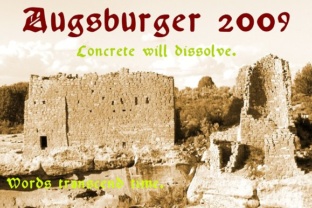
In an era where digital design often prioritizes speed and uniformity, there remains a distinct appreciation for typography that carries the weight of history. Augsburger 2009 is not merely a font; it is a deliberate revival of early printing aesthetics, designed to bridge the gap between the artisanal past and contemporary visual communication. This typeface draws its inspiration directly from the works of Ernhardt Ratdolt (1442–1528), a pivotal figure in the history of printing who operated in both Augsburg and Venice. For designers, publishers, and creatives seeking to inject authenticity, warmth, and historical resonance into their projects, Augsburger 2009 offers a compelling alternative to the sterile regularity of modern sans-serif and serif fonts.
The Historical Context: Ratdolt and the Early Press
To understand the value of Augsburger 2009, one must first appreciate the context from which it emerges. Ernhardt Ratdolt was more than just a printer; he was an innovator who significantly advanced printing technology during the incunabula period. Working initially in Augsburg before moving to Venice, Ratdolt mastered the art of multi-color printing and introduced the decorated title page, a feature that transformed how books were presented to readers.
Early printed books from this era possess a mysterious rhythm. The appearance of text was not perfectly uniform due to small variances in letter casting and inconsistencies in ink transfer from the press. These irregularities, once considered defects, have been reinterpreted as character. They give the text a human touch, a slight imperfection that signals craftsmanship rather than mass production. Augsburger 2009 captures this essence, preserving the subtle irregularities that make early print so engaging to the eye.
Key Characteristics of Augsburger 2009
Augsburger 2009 is characterized by its adherence to the structural integrity of 15th-century Venetian and German types while adapting them for modern readability. The typeface features:
- Historical Accuracy: The letterforms are based on Ratdolt’s original cuts, ensuring a high degree of historical fidelity.
- Textural Depth: Unlike flat digital fonts, Augsburger 2009 mimics the texture of ink on paper, creating a rich visual surface.
- Controlled Irregularity: The typeface includes subtle variations in stroke width and alignment, reflecting the manual nature of early printing without compromising legibility.
- Versatile Weight Range: Available in multiple weights, it allows for hierarchy in design while maintaining a consistent aesthetic voice.
These characteristics make Augsburger 2009 particularly effective for projects that require a sense of tradition or authority. It is not a novelty font but a serious tool for typographic expression.
Performance in Real-World Applications
When evaluating a typeface for professional use, performance extends beyond initial appeal. How does Augsburger 2009 hold up in extended reading? In what contexts does it shine?
Print Media and Editorial Design
In print, Augsburger 2009 excels. The typeface was designed with the physical properties of paper and ink in mind. On high-quality stock, the subtle textures and irregularities become pronounced, offering a tactile quality that digital screens cannot replicate. Magazines, literary journals, and book publishers may find it ideal for body text or pull quotes where a connection to heritage is desired. The typeface commands attention without shouting, providing a dignified backdrop for complex narratives.
Digital Interfaces and Web Typography
The transition to digital platforms presents challenges for historically inspired typefaces. Screen resolution and backlighting can sometimes flatten the nuanced details of Augsburger 2009. However, when used strategically, it can still be highly effective. It performs well in headlines, logos, and branding elements where large sizes allow the viewer to appreciate the intricate details of the letterforms. For body text on web pages, careful consideration of line height and contrast is necessary to maintain readability. The irregularities, while charming, can occasionally disrupt the smooth scanning process if overused in long-form content.
Branding and Identity
For brands seeking to convey reliability, craftsmanship, or historical depth, Augsburger 2009 is a strong candidate. Restaurants with a focus on traditional cuisine, boutique hotels, artisanal product labels, and educational institutions often benefit from its authoritative yet approachable tone. The typeface suggests a legacy of quality, implying that the brand values substance over fleeting trends.
Strengths and Practical Value
The primary strength of Augsburger 2009 lies in its ability to evoke emotion through form. In a market saturated with generic geometric sans-serifs, this typeface stands out by offering a narrative. It tells a story of human hands shaping metal, of ink pressing into fiber, and of knowledge being shared across centuries.
From a practical standpoint, its flexibility is notable. While rooted in history, it is engineered for modern workflows. It supports standard Latin character sets, making it suitable for a wide range of languages and texts. The consistency of the design ensures that it can be paired with complementary fonts for contrast, though care must be taken to balance its historical weight with lighter, more neutral partners.
Potential Limitations and Considerations
No typeface is universally applicable, and Augsburger 2009 is no exception. Its historical nature means it may feel out of place in contexts demanding minimalism, futurism, or high-tech aesthetics. Startups in the tech sector, for example, might find it too ornate or slow-paced for their brand identity. Additionally, the subtle irregularities that give the font its charm can be distracting in very small sizes or low-resolution environments. Designers should test the typeface thoroughly in its intended medium before committing to it for large-scale projects.
Another consideration is audience perception. While many viewers will respond positively to the warmth and authenticity of Augsburger 2009, others may perceive it as old-fashioned or difficult to read if not implemented correctly. Educating the client or stakeholder on the intent behind the choice is crucial to ensure the typeface is appreciated for its strategic value rather than dismissed as a stylistic quirk.
Who Benefits Most from Augsburger 2009?
This typeface is particularly well-suited for:
- Publishers and Editors: Those producing books, magazines, or academic papers that benefit from a sense of gravitas and tradition.
- Brand Strategists: Professionals working with clients in heritage industries, such as wine, spirits, fashion, or hospitality, where storytelling is central to the brand.
- Event Designers: Creators of invitations, posters, and signage for cultural events, exhibitions, or conferences that celebrate history or the arts.
- Educators and Academics: Individuals designing course materials or institutional communications that aim to project stability and intellectual rigor.
Freelancers and small business owners looking to differentiate themselves in a crowded market may also find value in using Augsburger 2009 to create a unique visual signature. It offers a way to stand out without resorting to gimmicks, relying instead on the timeless power of well-crafted typography.
Conclusion
Augsburger 2009 is more than a reproduction of a historical font; it is a thoughtful interpretation of the past for contemporary use. By capturing the spirit of Ernhardt Ratdolt’s innovations and the inherent beauty of early printing techniques, it provides designers with a powerful tool for communication. Its strengths lie in its authenticity, texture, and emotional resonance, while its limitations remind us of the importance of context and application. For those willing to engage with its nuances, Augsburger 2009 offers a lasting impact that transcends the ephemeral nature of much modern design. It is a testament to the idea that even in the digital age, the human touch remains invaluable.