Arnold Therhoernen: The Printer Who Changed Reading
When we think about the history of books, our minds often jump to famous inventors or massive publishing houses. However, the story of how we read today is deeply rooted in the work of individual craftsmen who pushed the boundaries of what was possible. One such figure is Arnold Therhoernen, also known by variations like Arnoldus ther Hornen or Arnold ter Hoernen. While his name may not be as instantly recognizable as Gutenberg’s, his contributions to the printing industry were revolutionary. He was not just a technician; he was an innovator who introduced features that made books more accessible and user-friendly for centuries to come.
Active in the vibrant city of Cologne during the late 15th century, Therhoernen operated at a pivotal moment in history. This was the era when the printing press was transitioning from a novelty to a necessity. Born out of academic curiosity and trained under the master printer Ulrich Zell, Therhoernen brought a unique blend of scholarly understanding and technical skill to his craft. His brief but impactful career, spanning from 1470 until his death from the plague in 1482, left an indelible mark on the world of literature and information dissemination.
From Student to Master Printer
To understand the significance of Therhoernen’s work, it helps to look at his background. Unlike many early printers who came from purely artisanal backgrounds, Therhoernen had a strong academic foundation. He graduated from the University of Cologne, which gave him a distinct advantage. He understood the content he was printing, not just the mechanics of moving type. This intellectual grounding allowed him to appreciate the needs of scholars and readers alike.
He learned his trade under Ulrich Zell, one of the earliest and most respected printers in Germany. Apprenticing under Zell provided Therhoernen with the technical rigor necessary to produce high-quality work. However, rather than simply replicating what he had seen, Therhoernen began to experiment. He saw opportunities to improve the reading experience, turning books from static objects into navigable tools. This shift from mere reproduction to thoughtful design is what separates him from "just another printer of the era."
Innovations That Shaped Modern Books
Perhaps the most enduring legacy of Arnold Therhoernen lies in two specific innovations that are now so common we rarely pause to consider them: the title page and standardized page numbering. Before these additions, early printed books (known as incunabula) often looked much like handwritten manuscripts. They lacked clear structural markers, making it difficult for readers to find specific sections or even identify the book’s contents at a glance.
The First Title Page
Therhoernen is credited with being the first to use a dedicated title page. In earlier books, titles were often written within the text itself or omitted entirely. By creating a separate page solely for the title, author, and publication details, Therhoernen made it easier for booksellers to display their wares and for readers to quickly identify a book’s subject. This simple change transformed the book from a mysterious object into a clearly labeled product, facilitating commerce and knowledge sharing.
Revolutionary Page Numbering
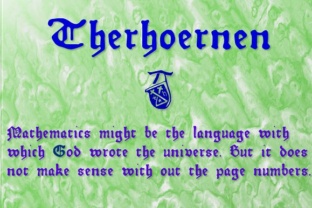
Equally important was his introduction of page numbers. While the concept of pagination existed in some form, Therhoernen was the first to implement it systematically in printed works. Interestingly, this idea is believed to have been suggested to him by Werner Rolevinck, a contemporary scholar and author. Rolevinck likely recognized the need for readers to reference specific passages easily, especially in complex texts.
Therhoernen’s approach to numbering was quite distinctive. Instead of placing numbers in the corners, he centered them halfway down the outer margin of the page. Furthermore, he set these numbers in Roman numerals. This aesthetic choice added a sense of order and classical elegance to the pages. For the reader, however, the benefit was practical: they could now flip to a specific page without having to search through the entire book. This feature was particularly valuable for students, theologians, and scientists who needed to cite or locate exact information.
The Fasciculus Temporum Phenomenon
If you want to see Therhoernen’s impact in action, look no further than the Fasciculus Temporum (Fascicle of Times). Published around 1474, this chronicle was written by Werner Rolevinck and became the most popular work by a living author of its time. It was essentially a medieval encyclopedia of history, blending biblical events with secular history in a way that appealed to a wide audience.
Therhoernen produced the first edition of this massive bestseller. Given the popularity of the text, accuracy and readability were paramount. By applying his new innovations—title pages and page numbers—to the Fasciculus Temporum, Therhoernen ensured that this dense historical data was accessible to a broader public. The success of this edition demonstrated that readers were ready for more organized, user-centric books. It proved that good design could drive sales and increase the spread of knowledge.
Why His Legacy Matters Today
You might wonder why a printer who died over 500 years ago matters to us today. The answer lies in the habits we take for granted. Every time you open a modern book, magazine, or digital document, you are benefiting from the standards established by pioneers like Therhoernen. The expectation that a book will have a clear title, an index, and numbered pages is a direct result of experiments conducted in workshops like his in Cologne.
For educators and creators, Therhoernen’s story offers a powerful lesson in user experience (UX). He didn’t just print words; he solved problems for his users. He anticipated the frustration of finding information in a large text and created a solution. Whether you are a blogger organizing your posts, a small business owner designing a manual, or a student compiling research, thinking like Therhoernen can help you create clearer, more effective communication.
Key Takeaways from Therhoernen’s Career
- Academic Insight: Understanding your audience’s needs leads to better products. Therhoernen’s university education helped him design books that scholars actually wanted to use.
- Iterative Innovation: He didn’t reinvent the wheel but improved upon existing methods. Small changes, like adding a title page, can have massive long-term effects.
- Collaboration: Working with authors like Rolevinck and masters like Zell allowed him to combine technical skill with intellectual depth.
Although the plague cut his life short, stopping his production after just twelve years, the seeds he planted grew into the modern publishing industry. Arnold Therhoernen reminds us that progress often comes from those who look closely at everyday tasks and ask, "How can this be better?" In the world of print, that question changed everything.