Albrecht Pfister: The Pioneering Printer of Bamberg
In the early days of European printing, few names resonate with the same historical weight and typographic significance as Albrecht Pfister. Active in the city of Bamberg, Bavaria, from roughly 1460 until his death in 1466, Pfister was not merely a participant in the printing revolution; he was a distinct innovator who shaped how information was visually presented to the public. While often overshadowed by the monumental legacy of Johannes Gutenberg, Pfister’s contributions were profound, particularly in his decision to print in the vernacular German language and his integration of woodblock illustrations into text set with movable type.
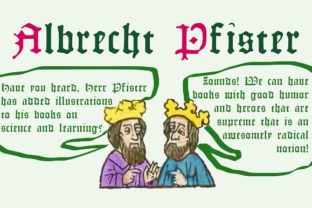
The font known today as Albrecht Pfister is directly based on his “Biblia Paperum,” a work that serves as a testament to his craftsmanship. For modern designers, historians, and publishers, understanding Pfister’s role offers more than just historical trivia; it provides insight into the foundational aesthetics of Western typography. This article explores the life, innovations, and lasting impact of Herr Pfister, examining why his work remains relevant in contemporary design and publishing contexts.
The Context of Early Printing in Bamberg
To appreciate Pfister’s achievements, one must first understand the environment in which he worked. Bamberg was a significant ecclesiastical and cultural center in the Holy Roman Empire during the mid-15th century. It was here that Pfister operated his press, producing nine known works. These publications ranged from religious texts to legal documents, reflecting the diverse needs of his clientele.
Pfister’s career coincided with the very infancy of movable type technology. While Gutenberg is credited with perfecting the metal movable type process, Pfister adapted and refined these techniques for his specific regional market. His output demonstrates a keen awareness of both technical limitations and aesthetic possibilities. He did not simply replicate existing manuscripts; he created a new visual language that balanced readability with artistic embellishment.
The Controversy of the 36-Line Bible
One of the most contentious debates in bibliographic history concerns the authorship of the famous “36-line Bible.” Some scholars have argued that Pfister played a significant role in its production, or perhaps even printed it entirely. While this attribution remains debated among experts, it underscores Pfister’s proximity to the highest levels of early printing innovation. Whether or not he was the sole printer, his association with such a prestigious project highlights his technical competence and reputation within the industry.
This controversy also illustrates the collaborative nature of early printing shops. Workshops were rarely solitary endeavors; they involved teams of compositors, pressmen, and illustrators working in concert. Pfister’s involvement in such high-profile projects suggests he was a leader in his field, capable of managing complex production workflows.
Two Major Innovations
Pfister is credited with two groundbreaking innovations that changed the trajectory of book production. These were not minor adjustments but fundamental shifts in how books were conceived and consumed.
- Printing in Native German: At a time when Latin dominated scholarly and religious texts, Pfister chose to publish in German. This decision democratized knowledge, making important texts accessible to a broader audience who were literate in their native tongue but not fluent in Latin. This move aligned with the growing humanist interest in vernacular literature and helped establish German as a viable language for serious publishing.
- Integration of Woodblock Prints: Pfister was among the first to combine movable type with woodblock illustrations. By using woodblocks for images and type for text, he created a hybrid format that was both efficient and visually rich. This technique allowed for consistent reproduction of images alongside variable text, a precursor to modern layout design.
These innovations had immediate practical benefits. Printing in German reduced the need for specialized translators or scribes, lowering costs and increasing speed. The use of woodblocks added visual appeal without requiring expensive hand-painting for each copy, making illustrated books more affordable for the emerging middle class.
Typographic Characteristics and Influence
The visual identity of Albrecht Pfister’s work is defined by its relationship to Gutenberg’s typefaces. Scholars have noted that Pfister was heavily influenced by Gutenberg’s designs, yet there are notable and subtle differences between the two men’s output. Pfister’s typefaces often exhibit a slightly more condensed structure and a distinct rhythm in letter spacing.
The font based on his “Biblia Paperum” captures the essence of this style. It features strong vertical stems, rounded serifs, and a balanced x-height that conveys authority and clarity. For modern users, this typeface offers a blend of historical authenticity and functional readability. It is particularly effective in contexts where a sense of tradition, reliability, and craftsmanship is desired.
Distinguishing Features
When comparing Pfister’s output to Gutenberg’s, several key distinctions emerge:
- Letterform Proportions: Pfister’s letters tend to be slightly narrower, allowing for tighter line lengths and more economical use of paper.
- Serif Detail: The serifs in Pfister’s type are often sharper and more defined, giving the text a crisp appearance.
- Overall Texture: The page texture in Pfister’s books is denser, reflecting his preference for compact layouts.
These differences may seem minor, but they contribute to the unique character of Pfister’s work. They reflect a pragmatic approach to printing, where efficiency and clarity were prioritized without sacrificing aesthetic quality.
Practical Applications in Modern Design
While Albrecht Pfister lived centuries ago, his typographic legacy continues to influence modern design. The Albrecht Pfister font, derived from his “Biblia Paperum,” is used in various professional and creative environments. Its versatility allows it to serve multiple purposes, from branding to editorial design.
Branding and Identity
For businesses seeking to convey heritage, trust, and expertise, a typeface rooted in the early days of printing can be highly effective. Logos, packaging, and marketing materials that utilize Pfister-inspired fonts can evoke a sense of timelessness and reliability. This is particularly relevant for industries such as law, finance, education, and publishing, where credibility is paramount.
Editorial and Publishing
In digital and print publishing, the Albrecht Pfister font offers excellent legibility. Its clear letterforms and balanced proportions make it suitable for body text in long-form articles, books, and reports. Designers appreciate its ability to maintain readability at small sizes while still retaining a distinctive character. This makes it an ideal choice for educational content, where clarity and engagement are essential.
Creative and Personal Projects
For hobbyists and creators, the font provides a way to connect with historical aesthetics in a contemporary context. It can be used in personal blogs, zines, and art projects to add a touch of vintage charm. The font’s versatility allows it to adapt to various styles, from formal invitations to casual social media graphics.
Evaluating Usability and Efficiency
When selecting a typeface like Albrecht Pfister, professionals should consider its usability across different mediums. In digital environments, the font’s rendering capabilities are crucial. High-quality digital versions ensure that the fine details of the serifs and letterforms are preserved, maintaining the integrity of the design.
Efficiency is another key factor. The font’s compact nature can reduce page counts in print publications, leading to cost savings in paper and shipping. In digital formats, efficient kerning and spacing can improve loading times and user experience, especially on mobile devices.
Conclusion
Albrecht Pfister’s contribution to the history of printing is significant and enduring. His innovations in vernacular publishing and illustrated books laid the groundwork for modern communication practices. The Albrecht Pfister font, based on his “Biblia Paperum,” continues to offer value to designers and publishers who seek a blend of historical depth and functional clarity. By understanding Pfister’s legacy, we gain a deeper appreciation for the craft of typography and its role in shaping our visual culture.
Whether you are a professional designer, an educator, or a business owner, incorporating elements of Pfister’s typographic style can enhance your projects. It connects your work to a rich tradition of craftsmanship and innovation, adding a layer of sophistication and authenticity that resonates with audiences. As we continue to navigate the evolving landscape of digital and print media, the lessons learned from pioneers like Albrecht Pfister remain as relevant as ever.