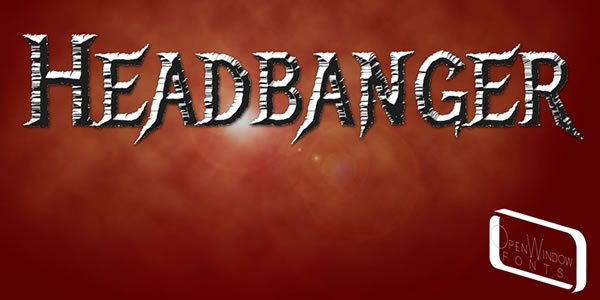
The Anatomy of Aggression: Why Headbanger Defines Modern Heavy Metal Typography
In the vast and often chaotic landscape of visual design, few typefaces command immediate attention like Headbanger. It is not merely a font; it is a cultural artifact, a visual shout that transcends language barriers and speaks directly to the visceral energy of heavy metal music. For designers, musicians, and enthusiasts alike, understanding the genesis and utility of this typeface offers a fascinating glimpse into how subculture aesthetics are codified into digital tools. This article explores the intricate design process behind Headbanger, its historical roots in album art, and its enduring relevance in contemporary graphic design.
From Canvas to Vector: The Design Philosophy
To truly appreciate Headbanger, one must look beyond the screen and imagine the gritty, high-contrast world of 1980s heavy metal culture. The font was not born in a sterile software environment but rather drawn from the raw inspiration of countless heavy metal album covers and concert posters. These visual mediums served as the primary canvas for the genre’s identity, characterized by sharp angles, jagged edges, and an overwhelming sense of power. The designer of Headbanger sought to distill these myriad influences into a single, cohesive entity—the quintessential heavy metal font.
The creation process was meticulous and deeply rooted in traditional artistic techniques before being digitized. First, the inline forms were carefully sketched by hand. This initial phase allowed the artist to experiment with flow, weight, and proportion without the constraints of digital grids. Once the foundational shapes were established, they were traced with precision. However, what sets Headbanger apart from other gothic or blackletter-inspired fonts is the utilization of a playful ‘cutout’ effect. This technique involves subtracting negative space within the letterforms, creating a stencil-like appearance that adds depth and complexity. It is this interplay between solid form and empty space that gives the letters their distinctive character, making them appear both aggressive and meticulously crafted.
Visual Characteristics and Aesthetic Appeal
The defining feature of Headbanger is its ability to balance readability with extreme stylization. While many metal fonts sacrifice legibility for shock value, Headbanger maintains a structural integrity that allows it to function effectively in various contexts. The inline forms provide a sense of rhythm, guiding the eye through the text with a dynamic pulse. The cutout effects add texture, ensuring that the font does not feel flat or monotonous even at smaller sizes.
- Jagged Edges: The outer contours of the letters mimic the lightning bolts and thorny vines often found on classic metal album art, reinforcing the genre’s association with intensity.
- Inline Detailing: By incorporating internal lines, the font gains a technical, almost architectural quality. This prevents the design from becoming too busy and ensures that each character remains distinct.
- High Contrast: The stark difference between the thick main strokes and the thin cutouts creates a high-impact visual contrast that is ideal for grabbing attention in crowded visual spaces.
This combination of elements results in a typeface that feels authentic to the genre while remaining versatile enough for modern applications. It captures the spirit of the "headbanger"—the energetic, rebellious fan who finds catharsis in loud music—translating that physical movement into static visual form.
Practical Applications in Music and Merchandise
The primary domain for Headbanger is, unsurprisingly, the music industry. Its most iconic use cases include concert posters, band logos, and merchandise packaging. When designing a poster for a heavy metal show, the typography needs to convey information quickly while also setting the mood. Headbanger excels in this role because its aggressive nature immediately signals the genre to the viewer. Whether announcing a local gig or a major festival tour, the font acts as a visual shorthand for the experience awaiting the attendee.
Beyond posters, the font has found a niche in the production of physical memorabilia. One of the more unique applications mentioned in its design history is its suitability for guitar picks. On such a small surface area, detail can easily become lost, but the bold outlines and clear cutouts of Headbanger ensure that the logo remains recognizable even when scaled down. This adaptability makes it a favorite among instrument manufacturers and custom pick creators who want to infuse their products with a rock-and-roll aesthetic.
- Concert Posters: Ideal for headlines and dates where maximum visibility is required.
- Album Artwork: Provides a thematic anchor for cover designs, complementing photographic or illustrative elements.
- Apparel Graphics: Works well on t-shirts and hoodies, where large-scale printing benefits from the font’s strong silhouette.
- Instrument Accessories: As noted, particularly effective on guitar picks due to its clarity at small scales.
Broader Creative Uses Beyond Metal
While Headbanger is undeniably tied to heavy metal, its application is not strictly limited to that genre. Designers often look to specialized fonts to evoke specific moods or themes. The rugged, industrial feel of Headbanger can be repurposed for projects related to motorsports, punk rock, horror films, or even fantasy gaming. In these contexts, the font serves to communicate strength, durability, and excitement.
For example, a graphic designer working on a promotional campaign for a demolition derby might find Headbanger more appropriate than a standard sans-serif font. The jagged edges suggest impact and motion, aligning perfectly with the theme of destruction and speed. Similarly, in the realm of tabletop gaming, the font could be used for rulebooks or character sheets that aim to create an immersive, gritty atmosphere. The key is to use the font intentionally, recognizing that its strong personality will dominate any layout it is placed in.
Considerations for Implementation
Despite its versatility, Headbanger requires careful handling to avoid common typographic pitfalls. Because of its complex structure, it can become difficult to read if overused or set in small point sizes for body text. It is best employed as a display font, reserved for headlines, titles, and short phrases. Using it for long passages of text would overwhelm the reader and detract from the message’s clarity.
Additionally, kerning and spacing play a crucial role in the effectiveness of Headbanger. The cutout effects mean that letters can visually bleed into one another if placed too closely together. Designers must pay close attention to the negative space between characters to maintain the intended aesthetic. Experimenting with tracking (letter-spacing) can help enhance the font’s dramatic effect, allowing the individual forms to breathe and stand out.
Color choice also impacts the perception of the font. While black on white is the classic presentation, experimenting with metallic gradients, blood reds, or neon greens can further emphasize the font’s thematic associations. However, excessive color variation can muddy the details of the cutouts, so restraint is advised. Letting the shape of the letters do the heavy lifting often yields the most professional results.
The Enduring Legacy of Headbanger
The phrase "Long live Headbanger" is more than just a slogan; it is a testament to the font’s staying power. In an era where digital trends come and go rapidly, Headbanger has maintained its relevance by staying true to its roots. It does not try to be something it is not. It embraces the excess and intensity of heavy metal culture without apology, offering designers a tool that is instantly recognizable and emotionally resonant.
For professionals in the creative industry, incorporating Headbanger into a project is a strategic decision. It communicates a specific attitude and connects with audiences who value authenticity and tradition within their respective subcultures. For hobbyists and educators, studying the font provides insight into the intersection of music, art, and typography. It demonstrates how visual design can amplify audio experiences, creating a holistic sensory impression.
Ultimately, Headbanger stands as a benchmark for genre-specific typography. It proves that a font can be highly specialized yet widely applicable, retaining its core identity while adapting to new mediums. From the ink-stained fingers of a poster printer in the 1980s to the vector paths of a modern graphic designer, Headbanger continues to embody the spirit of rebellion and creativity that defines the heavy metal community. As long as there are concerts to attend, albums to release, and guitars to shred, Headbanger will remain a vital component of the visual language of rock and roll.