Rising Sun: A Retro Blackletter Revival
In the bustling print shops of 19th-century Paris, a quiet rebellion was taking shape. While the majority of printers were rushing to adopt the clean, rational lines of humanist-influenced Roman typefaces—a trend that signaled modernity and clarity—some artisans looked backward with deliberate intent. Among them was the Soleil d’Or printing concern, a house known for its craftsmanship and willingness to experiment. They championed a style that seemed almost anachronistic at the time: blackletter.
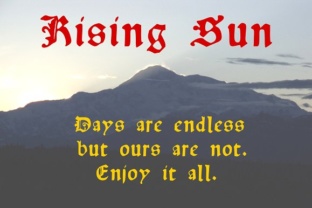
This wasn’t merely nostalgia; it was a strategic embrace of "retro" aesthetics before the term existed. By targeting conservative markets in Northern Europe that still valued tradition, solidity, and historical continuity, these printers tapped into a desire for visual authority. Today, we recognize this typeface as Rising Sun, a font that carries the weight of history while offering surprising versatility for modern creators. With over 900 defined glyphs, it is not just a decorative choice but a robust tool for design.
The Historical Context of Retro Design
To understand the power of Rising Sun, one must first appreciate why it stood out in its era. The mid-to-late 19th century was a period of rapid industrialization and standardization. Roman types were efficient, legible, and cheap to produce. Blackletter, by contrast, was dense, complex, and associated with medieval manuscripts and religious texts. For a printer like Soleil d’Or to invest in such a typeface was a bold move.
Retro design is often misunderstood as simply copying old styles. However, the original use of blackletter by firms like Soleil d’Or was about cultural resonance. It spoke to audiences who felt disconnected from the rapid changes of the modern world. They wanted to see their values reflected in the ink on the page. Rising Sun captures this sentiment. It offers a sense of permanence and gravitas that lighter, more neutral sans-serifs or even standard serifs cannot always provide.
Why Blackletter Still Matters
Many designers dismiss blackletter as too niche or difficult to read for body text. This is a common misconception. When used correctly, blackletter adds texture, hierarchy, and character to a layout. Rising Sun, specifically, is designed with a balance that makes it more accessible than its medieval ancestors. It retains the dramatic vertical stress and intricate details of gothic scripts but smooths out the edges enough to remain functional in contemporary contexts.
- Visual Authority: Blackletter commands attention. It signals that the content is important, traditional, or premium.
- Cultural Connection: It evokes specific eras and regions, particularly Germanic and Central European traditions.
- Contrast: Pairing Rising Sun with clean, minimalist fonts creates a striking visual tension that is highly effective in branding.
Practical Applications for Modern Creators
The true value of Rising Sun lies in its application. With over 900 glyphs, it offers extensive ligatures, alternates, and special characters that allow for nuanced typographic expression. Here is how different professionals can leverage this typeface in their work.
Branding and Identity Design
For small business owners and entrepreneurs, establishing a memorable brand identity is crucial. Rising Sun is ideal for businesses that want to convey heritage, craftsmanship, or authenticity. Consider a craft brewery, a artisanal bakery, or a boutique law firm. These entities benefit from the perceived stability and tradition that blackletter implies.
However, restraint is key. Use Rising Sun for logos, headers, or short taglines rather than long paragraphs. Let the typeface be the hero. If you are designing a logo, utilize the unique glyphs and ligatures to create custom monograms or wordmarks that stand out in a crowded marketplace. The density of the letters can create a beautiful solid block of color, which is a powerful graphic element in itself.
Editorial and Publishing
Educators, bloggers, and publishers can use Rising Sun to add distinction to editorial projects. Imagine a magazine feature on history, art, or literature. Using Rising Sun for pull quotes, chapter headings, or drop caps can elevate the visual storytelling. It creates a tactile feel on the screen, mimicking the experience of reading a printed book.
For educators creating course materials or textbooks, especially those focused on humanities or history, Rising Sun can serve as an engaging display font. It helps break up dense text and guides the reader’s eye through the material. Just ensure that the surrounding body text is simple and highly legible to maintain readability.
Digital Marketing and Social Media
In the digital space, where screens are dominated by uniform sans-serif interfaces, Rising Sun offers a point of differentiation. Marketers can use it for social media graphics, email subject lines, or banner ads to grab attention quickly. The high contrast and intricate details render well on high-resolution displays, making it suitable for Instagram posts, Pinterest pins, or website headers.
When using Rising Sun in digital campaigns, consider the context. It works exceptionally well for seasonal campaigns, holiday promotions, or events that have a classic or formal tone. Avoid using it for call-to-action buttons or critical navigation elements, as the complexity may hinder quick recognition.
Design Tips for Effective Usage
To get the most out of Rising Sun, designers should follow a few practical guidelines. These tips will help ensure that your projects remain clear, organized, and audience-friendly.
- Pair Wisely: Balance the complexity of Rising Sun with simplicity. Pair it with clean sans-serifs like Helvetica, Roboto, or Open Sans. The contrast between the ornate and the plain creates visual harmony without overwhelming the viewer.
- Respect White Space: Blackletter is visually heavy. Give it room to breathe. Ample white space around Rising Sun text prevents the design from feeling cluttered and allows the intricate details to be appreciated.
- Utilize Glyph Variations: Take advantage of the 900+ glyphs. Experiment with different capital forms, ligatures, and punctuation marks. Small variations can add personality and uniqueness to your typography, making your design feel custom-made.
- Consider Color: The impact of blackletter is enhanced by thoughtful color choices. Deep blacks, rich burgundies, or forest greens complement the historical feel. Avoid overly bright or neon colors unless you are aiming for a specific ironic or postmodern aesthetic.
- Maintain Hierarchy: Use size and weight to establish a clear information hierarchy. Let Rising Sun be the headline, and keep body text neutral. This ensures that your message is communicated effectively without sacrificing style.
Accessibility and Readability
While Rising Sun is beautiful, it is not suitable for all audiences or contexts. For users with dyslexia or visual impairments, the dense strokes and complex shapes may be difficult to parse. Always prioritize accessibility. If your primary goal is clear communication of large amounts of text, stick to standard readable fonts. Reserve Rising Sun for display purposes where aesthetic impact outweighs the need for rapid decoding.
Embracing the Backward Trend
The story of Soleil d’Or and Rising Sun reminds us that looking back can be a forward-thinking strategy. In a world obsessed with the new, there is immense value in the timeless. By embracing the "retro" trend of blackletter, these 19th-century printers found a way to connect with their audience on a deeper, emotional level.
Today, as creators, we have the same opportunity. Rising Sun is not just a font; it is a bridge between past and present. It allows us to infuse our modern designs with a sense of history, craft, and intentionality. Whether you are designing a brand identity, editing a publication, or creating digital content, considering the role of retro aesthetics can lead to more meaningful and impactful results.
So, the next time you open your design software, don’t default to the usual suspects. Explore the possibilities of Rising Sun. Experiment with its glyphs, pair it with unexpected companions, and see how it transforms your project. You might find that sometimes, the best way to move forward is to take a step back.