La Forest: A Gothic Display Font for Vintage Design
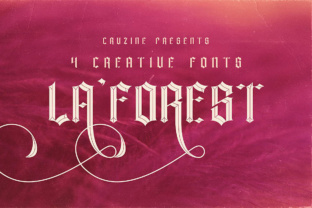
La Forest is not merely a typeface; it is an atmospheric tool. It belongs to the lineage of Blackletter and gothic scripts, yet it avoids the heavy, impenetrable weight often associated with traditional medieval calligraphy. Instead, it offers a beautifully constructed aesthetic that feels both ancient and accessible. Reminiscent of old, fairytale-styled illustrations, La Forest serves as an amazing display font suitable for a large range of vintage projects. Whether you are designing a wedding invitation, branding a craft brewery, or creating a digital poster, this font provides a distinct visual voice that commands attention without sacrificing readability in its intended context.
Understanding the Aesthetic of La Forest
To appreciate La Forest, one must first understand its roots. It draws heavily from historical gothic styles but softens the edges to create something more approachable. The letters possess a hand-crafted feel, reminiscent of ink drawn by quill on parchment, yet they maintain the structural integrity required for modern digital design. This balance is crucial. A font can be historically accurate but unusable if it is too difficult to read. Conversely, a font can be easy to read but lack character. La Forest strikes a rare equilibrium.
The "Blackletter" influence is evident in the sharp angles and vertical emphasis of the characters. However, unlike Fraktur or Textura fonts which can appear dense and intimidating, La Forest has generous spacing and cleaner lines. This makes it versatile. It does not scream "medieval manuscript"; rather, it whispers "vintage elegance." This subtlety allows it to fit into contemporary designs where a purely historical font might clash with modern elements.
Why Different Audiences Care About Typography
Typography is often overlooked until a project goes wrong. For some, it is a functional necessity; for others, it is the primary emotional hook. How you view La Forest depends entirely on your role in the creative process.
For Beginners and Hobbyists
If you are just starting your journey into graphic design, typography can feel like a foreign language. You might worry about kerning, ligatures, and hierarchy. La Forest simplifies this anxiety because it is designed as a display font. This means it is meant to be used in large sizes—titles, headers, and logos—rather than in long paragraphs of body text. For a beginner, this is a significant advantage. You do not need to worry about line length or reading fatigue. You simply place the text, and the font’s inherent structure handles the heavy lifting of visual interest.
Consider a hobbyist creating a scrapbook page or a custom birthday card. Using La Forest allows them to add a touch of sophistication that looks professionally curated. It elevates simple layouts instantly. The learning curve is low because the font’s personality does most of the work. You do not need advanced skills to make it look good; you only need to give it enough white space to breathe.
For Creators and Freelancers
Freelance designers and content creators are constantly searching for unique assets that help their clients stand out. In a saturated market, generic sans-serif fonts often blend into the background. La Forest offers a specific niche appeal. It is perfect for brands that want to evoke nostalgia, craftsmanship, or romance.
A freelance illustrator working on a book cover for a fantasy novel might choose La Forest for the title. It immediately signals genre and tone to the reader. Similarly, a social media manager for a boutique coffee shop could use La Forest for weekend special announcements. The font adds a layer of authenticity and warmth that resonates with consumers looking for artisanal experiences. For these professionals, the value of La Forest lies in its ability to communicate brand identity quickly and effectively.
For Professionals and Agencies
Experienced typographers and agency art directors look beyond aesthetics. They evaluate quality, licensing, and technical performance. From a technical standpoint, La Forest is a well-constructed digital font. It likely includes standard OpenType features such as alternates or swashes, allowing for variation within a single word. This flexibility is essential for high-end branding where consistency and detail matter.
Professionals also consider reliability. Does the font render correctly across different platforms? Is it legible at small sizes when scaled down? While La Forest is best suited for display purposes, its clean construction ensures that even at moderate sizes, it remains clear. For agencies, the decision to use La Forest is often strategic. It helps position a client in the "premium vintage" or "artisanal" category. It suggests that the product behind the brand is handcrafted, thoughtful, and enduring.
Practical Applications Across Industries
The versatility of La Forest allows it to cross industry boundaries. Here is how different sectors might integrate this typeface into their workflows:
- Wedding and Event Industry: Invitations, save-the-dates, and signage benefit from the romantic, storybook quality of La Forest. It pairs exceptionally well with floral illustrations and watercolor backgrounds.
- Food and Beverage: Craft breweries, distilleries, and organic food brands use gothic-inspired fonts to convey tradition and quality. La Forest works well on labels and packaging, suggesting a heritage of brewing or baking.
- Publishing and Media: Bloggers and publishers might use La Forest for pull quotes, section headers, or magazine titles. It breaks up monotony in long-form content and draws the eye to key messages.
- Retail and E-commerce: Small business owners selling handmade goods can use La Forest in email marketing campaigns and website banners. It creates a cohesive visual identity that feels personal and curated.
Evaluating Quality and Long-Term Usefulness
When selecting a font, it is important to look past the initial appeal. Does La Forest hold up over time? Fonts with strong stylistic identities can sometimes feel trendy and date quickly. However, La Forest is rooted in a classic style that has remained relevant for centuries. This timeless quality makes it a safe investment for long-term projects.
Furthermore, consider the ease of use. A complex font that requires extensive tweaking can slow down production. La Forest’s balanced design minimizes the need for constant adjustment. Its readability, while optimized for display, is sufficient for short phrases and headlines, reducing the cognitive load on the designer. This efficiency is valuable for professionals who manage tight deadlines.
Matching Your Goals with the Right Tool
Not every project needs a gothic display font. If you are designing a technical manual, a corporate annual report, or a mobile app interface, La Forest would likely be inappropriate. It lacks the neutrality required for functional, information-heavy design. However, if your goal is to evoke emotion, tell a story, or create a memorable visual impression, La Forest is an excellent choice.
Ask yourself what feeling you want to convey. Do you want to feel modern and minimal? Choose a geometric sans-serif. Do you want to feel warm and inviting? Consider a rounded serif. Do you want to feel historic, magical, or elegant? La Forest is the answer. By aligning the font’s personality with your project’s intent, you ensure that your design communicates the right message to your audience.
In conclusion, La Forest is more than just a decorative typeface. It is a bridge between the past and the present, offering a sophisticated way to inject vintage charm into modern design. Whether you are a beginner looking to elevate your first project or a professional seeking a reliable display font, La Forest provides the tools to create something truly special. Its beauty lies in its restraint and its history, making it a valuable asset in any designer’s toolkit.