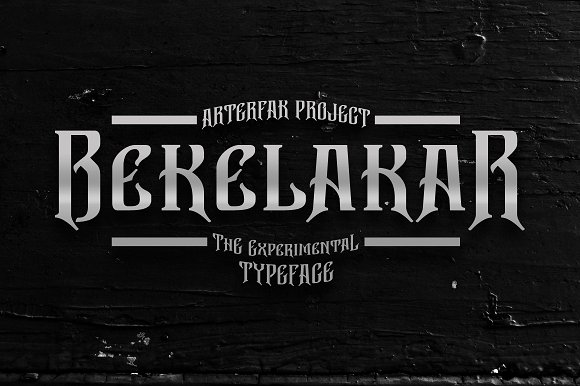
Bekelakar: Strategic Typography for High-Impact Brand Positioning
In the landscape of visual communication, typography is rarely just about readability; it is a primary vehicle for tone, authority, and emotional resonance. For professionals operating in niches that demand intensity—such as heavy metal branding, horror entertainment, extreme sports marketing, or edgy fashion labels—the choice of typeface can make or break a campaign. Bekelakar emerges as a specialized tool in this arena, offering a distinct aesthetic that bridges the gap between traditional blackletter heritage and modern experimental design.
This article provides a strategic analysis of Bekelakar, examining its structural characteristics, appropriate use cases, and the operational considerations necessary to deploy it effectively. The goal is not merely to describe the font, but to outline how decision-makers, designers, and brand strategists can leverage Bekelakar to achieve specific communicative outcomes while avoiding common pitfalls associated with overly decorative typefaces.
Deconstructing the Bekelakar Aesthetic
To utilize Bekelakar strategically, one must first understand its typographic DNA. It is classified as a blackletter font, a style rooted in medieval manuscript traditions characterized by dense vertical strokes and sharp angles. However, Bekelakar distinguishes itself through an "experimental" approach. It does not adhere strictly to historical Fraktur or Textura norms; instead, it incorporates irregularities and stylized elements that evoke a sense of raw energy, aggression, and gothic atmosphere.
The font is available in two primary variants:
- Regular: This version maintains the core blackletter structure but may offer slightly more legibility than extreme display versions, making it suitable for larger headlines or short body text where impact is prioritized over extended reading.
- All-Caps: Given the inherent complexity of blackletter scripts, the All-Caps variant is often the most functional for high-impact applications. It ensures uniformity in stroke weight and spacing, which is critical when dealing with the visual density of gothic-style letterforms.
The combination of hardcore, horror, and metal gothic styles means that Bekelakar carries immediate psychological associations. When a viewer encounters this typeface, they anticipate themes of darkness, rebellion, tradition, and power. Understanding these subconscious cues is the first step in using the font as a strategic asset rather than a mere decorative afterthought.
Strategic Applications in Branding and Marketing
The utility of Bekelakar extends beyond niche subcultures. While its primary domain is clear, savvy entrepreneurs and marketers recognize that distinctive typography can serve as a powerful differentiator in crowded markets. Below are key areas where Bekelakar can drive value when applied with intention.
Brand Identity and Differentiation
In industries saturated with minimalist sans-serif fonts and clean geometric types, a bold blackletter like Bekelakar can create instant recognition. For small business owners in the craft beer industry, tattoo studios, or independent music labels, adopting Bekelakar signals authenticity and adherence to a specific cultural code. It communicates that the brand is unapologetic and rooted in tradition, yet modern enough to experiment with form.
When planning a brand refresh, consider whether your target audience values exclusivity and edge. If your customer base consists of adults aged 20–50 who appreciate craftsmanship and intensity, Bekelakar can reinforce your positioning as a premium, niche provider. However, this strategy requires consistency; the font must be integrated into logos, packaging, and digital assets cohesively to build long-term brand equity.
Event Promotion and Experiential Marketing
For educators, freelancers, and event organizers promoting concerts, festivals, or horror-themed exhibitions, Bekelakar serves as an effective attention-grabber. The font’s aggressive nature aligns naturally with the excitement and anticipation of live events. In promotional materials, such as flyers, posters, or social media banners, Bekelakar can elevate the perceived stakes of an event.
Strategic tip: Use Bekelakar for headlines and key dates, but pair it with highly legible sans-serif fonts for logistical details (time, location, ticket links). This hybrid approach respects the user experience by ensuring that while the mood is set, the essential information remains accessible.
Content Creation and Digital Presence
Bloggers and publishers covering topics related to true crime, history, fantasy literature, or alternative culture can use Bekelakar to enhance their visual identity. By incorporating the font into section headers, pull quotes, or watermark designs, creators can establish a unique voice that stands out in search results and social feeds. This contributes to E-E-A-T (Experience, Expertise, Authoritativeness, and Trustworthiness) by demonstrating a thoughtful curation of visual elements that align with content depth.
Operational Considerations and Best Practices
Using Bekelakar effectively requires more than simply inserting it into a design file. There are practical constraints and operational guidelines that professionals must follow to ensure the font supports, rather than hinders, their goals.
Leveraging the All-Caps Variant
Blackletter fonts are notoriously difficult to read at small sizes or in long paragraphs. The intricate interplay of thick and thin strokes can cause visual fatigue, leading users to disengage from the content. Therefore, the All-Caps version of Bekelakar is often the superior choice for most professional applications. It simplifies the visual noise and allows the distinctive character shapes to shine without compromising clarity.
Decision-makers should prioritize the All-Caps variant for:
- Logo construction
- Short headlines and titles
- Product names or SKU identifiers
- Social media profile pictures or avatars
Avoid using any blackletter variant for body copy. Even if the Regular version is used, it should be restricted to large-scale displays only. Prioritize readability in all other contexts to maintain a positive customer experience.
Contextual Appropriateness
One of the greatest risks in using Bekelakar is contextual mismatch. Deploying a hardcore, gothic-style font on a corporate website for a healthcare startup or a financial consultancy can confuse stakeholders and damage credibility. The font sends a signal of rebellion and intensity that contradicts the trust and stability required in those sectors.
Before licensing or implementing Bekelakar, conduct a context audit. Ask:
- Does this font align with our core brand values?
- Is our target audience receptive to this aesthetic?
- Will this font age well, or will it appear dated quickly?
If the answer to any of these questions is uncertain, proceed with caution. It is often better to use Bekelakar as an accent element within a broader, more neutral typographic system than as the dominant voice of the brand.
Risks and Mitigation Strategies
Even the most carefully planned design choices carry risks. With Bekelakar, the primary risks revolve around legibility, accessibility, and overuse.
Legibility and Accessibility
Search engines and users alike favor content that is easy to consume. If Bekelakar is used excessively, it can create barriers to entry for users with visual impairments or dyslexia. To mitigate this, ensure that all critical information is presented in a secondary, highly accessible font. This dual-font strategy allows you to maintain the aesthetic appeal of Bekelakar while adhering to web accessibility standards (WCAG).
Over-Saturation
There is a tendency among creators to rely heavily on striking fonts to compensate for weak conceptual ideas. Using Bekelakar everywhere—from the logo to the footer to every blog header—can lead to visual clutter and brand dilution. Restraint is a sign of sophistication. Use the font sparingly to highlight key moments or messages. Let it act as a punctuation mark in your visual language, not the entire sentence.
Licensing and Commercial Use
As a professional resource, it is crucial to verify the licensing terms of Bekelakar before integrating it into commercial projects. Fonts are intellectual property, and misuse can lead to legal complications. Ensure that the license covers your intended use case, whether it is for print, digital, merchandise, or broadcast. Proper licensing protects your business operations and demonstrates professionalism to clients and partners.
Long-Term Value and Adaptability
Investing in a distinctive typeface like Bekelakar can yield long-term benefits for brands willing to commit to a cohesive visual strategy. As trends shift toward personalization and authentic storytelling, fonts with strong character become increasingly valuable. They help brands cut through the noise of generic templates and AI-generated content.
However, adaptability is key. A brand built entirely around a single, extreme font may struggle to evolve as its market expands. Consider how Bekelakar can be paired with complementary typefaces that allow for flexibility. For example, combining Bekelakar with a modern grotesque sans-serif creates a dynamic tension between old and new, allowing the brand to remain relevant across diverse platforms and demographics.
By approaching Bekelakar with strategic intent, professionals can transform a decorative element into a powerful tool for communication. It supports goals by reinforcing brand identity, enhances creativity by offering a unique visual vocabulary, and improves productivity by providing a clear direction for design decisions. Ultimately, the value of Bekelakar lies not in its appearance alone, but in how thoughtfully it is integrated into the broader ecosystem of your business or project.
For entrepreneurs, marketers, and creators looking to make better decisions in visual communication, understanding the nuances of typefaces like Bekelakar is essential. It is about more than picking a font that looks cool; it is about selecting a tool that aligns with your objectives, respects your audience, and delivers consistent results. When used intentionally, Bekelakar can anchor a brand in a specific cultural moment while maintaining the versatility needed for long-term growth.