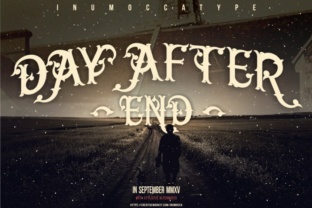
Day After End: Reviving Victorian Elegance in Modern Brand Identity
In an era where digital minimalism and sans-serif uniformity dominate the visual landscape, a quiet revolution is taking place in the realm of typography. Designers, brand strategists, and creative entrepreneurs are increasingly turning their attention to historical aesthetics that offer depth, character, and narrative weight. At the forefront of this movement is Day After End, a unique typeface inspired by Victorian literature. This font is not merely a collection of glyphs; it is a bridge between the ornate past and the pragmatic present, offering a sophisticated solution for brand logos, labels, T-shirts, and much more.
The relevance of Day After End lies in its ability to evoke emotion through structure. Unlike the sterile neutrality of many contemporary fonts, this typeface carries the weight of history, the texture of old paper, and the elegance of 19th-century printing presses. For professionals seeking to differentiate their brands in a saturated market, adopting such a distinct typographic voice can be the difference between being overlooked and being remembered.
The Shift Toward Narrative-Driven Design
Consumer behavior has shifted significantly over the last decade. Today’s audience, particularly those aged 20 to 50, craves authenticity and storytelling. They are less interested in products that feel mass-produced and more drawn to brands that communicate a sense of heritage, craftsmanship, and intentionality. This trend is evident across various sectors, from artisanal coffee roasters to independent fashion labels.
Day After End taps directly into this desire for narrative. By drawing inspiration from Victorian literature, the font brings with it an implicit promise of quality and timelessness. When a consumer sees a logo or label set in this typeface, they subconsciously associate the product with the rich literary traditions of the Victorian era—a period known for its attention to detail, moral seriousness, and artistic flourish. This psychological connection adds value to the brand without requiring additional marketing spend.
For bloggers, educators, and content creators, this shift means that visual presentation is no longer secondary to content. The choice of typography becomes part of the content itself. Using Day After End on a blog header or in an educational infographic signals to the reader that the material within is thoughtful, researched, and crafted with care. It sets a tone of authority and refinement that resonates with adults who appreciate nuance in communication.
Evolution of Typographic Trends
To understand why Day After End is gaining traction, one must look at the evolution of design trends. For years, the tech industry drove a preference for clean, geometric sans-serifs like Helvetica, Roboto, and Open Sans. These fonts were chosen for their legibility on screens and their neutral, "invisible" quality. However, as digital interfaces became ubiquitous, this homogeneity led to visual fatigue. Users began to crave distinction.
This fatigue has given rise to a counter-movement often referred to as "neo-vintage" or "heritage modernism." Designers are revisiting serif fonts, decorative displays, and historical styles, but with a modern twist. Day After End fits perfectly into this category. While it is rooted in Victorian aesthetics, it is designed with contemporary usability in mind. It avoids the excessive ornamentation that can hinder readability on small screens, instead focusing on the elegant curves and strong structural integrity that define high-quality serif design.
The evolution of web technologies and print-on-demand services has also played a crucial role. In the past, using complex, historically inspired typefaces was limited to high-end print runs due to cost and technical constraints. Today, high-resolution displays and flexible digital licensing allow creators to experiment freely. Freelancers and hobbyists can now incorporate Day After End into T-shirt designs, custom packaging, and digital branding with ease, democratizing access to sophisticated design tools.
Practical Applications for Creators and Businesses
The versatility of Day After End makes it an invaluable asset for a wide range of users. Its specific strengths lie in applications where brand identity needs to stand out while maintaining a sense of sophistication. Below are some practical ways this typeface can be utilized effectively.
- Brand Logos: For businesses in the hospitality, publishing, legal, or luxury goods sectors, a logo set in Day After End conveys stability and tradition. The serif details add a layer of complexity that suggests a well-established entity, even if the business is new. It works exceptionally well for boutique hotels, law firms, and premium restaurants looking to project an image of exclusivity.
- Product Labels: In the world of craft beverages, cosmetics, and gourmet foods, packaging is the first point of contact. A label featuring Day After End immediately elevates the perceived value of the product. The Victorian-inspired aesthetic pairs beautifully with materials like kraft paper, matte finishes, and foil stamping, creating a tactile experience that complements the visual one.
- Apparel and Merchandise: The rise of streetwear and casual fashion has seen a surge in demand for graphic tees that tell a story. Day After End is perfect for T-shirt designs that lean into literary themes, vintage aesthetics, or retro-modern vibes. It allows designers to create eye-catching graphics that feel curated rather than generic. Whether it’s a quote from a classic novel or a stylized brand name, the font ensures the message is delivered with impact.
- Digital Content and Marketing: Marketers and bloggers can use Day After End for headers, pull quotes, and promotional banners. Because it is a display-oriented typeface, it should be used sparingly to draw attention to key messages. Pairing it with a simpler body font creates a harmonious hierarchy that guides the reader’s eye and enhances engagement.
Integrating Heritage with Modern Workflows
Adopting a typeface like Day After End requires more than just selecting it from a library; it requires an understanding of how to integrate it into modern workflows. For professionals and business owners, this means considering context, contrast, and consistency.
Contrast is Key: One of the most common mistakes when using decorative or historical typefaces is overcrowding the design. Day After End has enough character to stand alone, so it should not be paired with other busy fonts. Instead, pair it with clean, understated sans-serifs for body text. This contrast highlights the elegance of the Victorian-inspired headings while ensuring that the informational content remains easy to read.
Consistency Across Platforms: In a multi-channel marketing strategy, consistency builds trust. If a brand uses Day After End on its website, it should also appear on social media graphics, email newsletters, and physical packaging. This cohesive approach reinforces brand recognition. For freelancers and educators, this might mean creating a simple style guide that defines where and how the font is used, ensuring that every piece of content feels part of a unified whole.
Leveraging Technology: Modern design software offers robust features for managing typography. Use tracking (letter-spacing) and leading (line-height) adjustments to optimize the readability of Day After End. Victorian fonts can sometimes feel dense, so slight increases in spacing can breathe life into the letters, making them more accessible to contemporary eyes. Additionally, consider color palettes that complement the font’s historical roots—deep greens, burgundies, navy blues, and charcoal grays often enhance the Victorian aesthetic.
Why Now? The Cultural Moment for Vintage Revival
The current cultural moment favors a blend of nostalgia and innovation. People are looking for anchors in a rapidly changing world, and historical aesthetics provide a sense of continuity. Day After End captures this sentiment by referencing a time of industrial growth and literary flourishing, periods that resonate with today’s entrepreneurial spirit.
Moreover, the sustainability movement influences design choices. There is a growing preference for "slow design"—approaches that prioritize longevity over fleeting trends. A Victorian-inspired typeface is inherently timeless. It does not date quickly, unlike many trendy geometric fonts that may feel outdated in a few years. For businesses investing in branding, choosing a font like Day After End is a strategic decision that supports long-term brand equity.
For hobbyists and curious readers, engaging with this typeface is a form of creative exploration. It encourages a deeper appreciation for the craft of lettering and the history of print. In workshops, classrooms, and online communities, there is a renewed interest in the tactile nature of words. Day After End serves as a tool for this exploration, allowing users to connect with the physicality of language in a digital age.
Conclusion: A Timeless Tool for Modern Creatives
Day After End represents more than just a stylistic choice; it is a statement of intent. It signals that a brand or creator values history, craftsmanship, and narrative depth. As we move further into a digital-first world, the need for authentic, human-centric design becomes more critical. This unique typeface offers a way to inject soul and substance into visual communications.
Whether you are a business owner launching a new line of artisanal goods, a marketer crafting a campaign for a luxury brand, or a blogger sharing your thoughts on culture and society, Day After End provides the perfect typographic foundation. It bridges the gap between the Victorian past and the modern future, offering a versatile, elegant, and impactful solution for any creative project. By embracing this distinctive font, you are not just designing; you are telling a story that resonates with the enduring human desire for beauty and meaning.