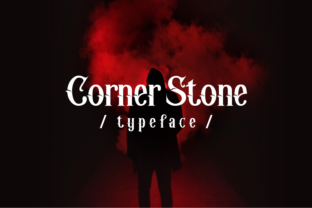
Corner Stone: Elevating Brand Identity with a Bold Blackletter Typeface
In the crowded landscape of visual communication, standing out requires more than just a catchy slogan or a vibrant color palette. It demands a typographic foundation that commands attention and conveys authority. For designers, brand managers, and creative professionals seeking to establish a sense of heritage, strength, and sophistication, Corner Stone emerges as a compelling solution. This fresh blackletter typeface is not merely a decorative element; it is a strategic tool designed to anchor your visual identity in a way that feels both timeless and modern.
The challenge many creators face today is balancing historical aesthetic appeal with contemporary readability and versatility. Traditional blackletter fonts can often feel heavy, archaic, or difficult to integrate into digital-first workflows. They risk appearing gimmicky if used incorrectly. However, when applied with intention, a font like Corner Stone can transform a simple logo or label into a memorable emblem. This article explores how Corner Stone addresses these common design hurdles and offers practical applications for various professional needs.
Understanding the Appeal of Modern Blackletter
Before diving into the specific utility of Corner Stone, it is essential to understand why blackletter remains a potent force in design. Historically associated with medieval manuscripts and official decrees, this script style evokes feelings of tradition, craftsmanship, and solidity. In the modern context, however, the goal is not to replicate history but to reinterpret it. A "fresh" blackletter implies an update—cleaner lines, better kerning, and a structure that works seamlessly across different media.
Corner Stone embodies this modern interpretation. It retains the dramatic flair and intricate details characteristic of gothic scripts but strips away unnecessary clutter. This makes it accessible to a broader audience while still delivering the gravitas required for high-stakes branding. Whether you are designing for a luxury goods market or a craft-oriented service industry, the choice of typography sets the tone before the viewer even reads the text. Corner Stone provides that initial impact with elegance and precision.
Strategic Applications for Logos and Branding
One of the most significant challenges in logo design is creating a mark that is distinct yet scalable. Many brands struggle with logos that look great on a business card but become illegible on a mobile app icon. Corner Stone offers a robust solution for primary logotypes, particularly for industries where trust and legacy are paramount.
- Luxury and Heritage Brands: For businesses in fashion, jewelry, or fine dining, Corner Stone communicates exclusivity. Its sharp angles and structured forms suggest precision and high quality, appealing to consumers who value craftsmanship.
- Craft and Artisanal Products: Breweries, distilleries, and artisanal food producers often use blackletter to signal authenticity and handcrafted origins. Corner Stone’s fresh take ensures that these brands do not appear stuck in the past but rather rooted in tradition while moving forward.
- Professional Services: Law firms, architectural studios, and financial institutions may utilize Corner Stone for their letterheads or primary signage. The font’s stability projects reliability and strength, qualities that are central to building client confidence.
When using Corner Stone for a logo, consider the balance between the boldness of the typeface and the simplicity of the surrounding elements. Because the font has strong visual weight, it often performs best when paired with clean, sans-serif supporting text. This contrast highlights the uniqueness of the brand name while maintaining overall legibility.
Enhancing Labels and Packaging Design
Packaging is your product’s first point of contact with the consumer. In a retail environment, shelf space is limited, and competition is fierce. A well-designed label must grab attention instantly. Corner Stone excels in this arena by providing a focal point that draws the eye. Its distinctive shapes create a silhouette that is recognizable even from a distance.
For music book covers, album art, or limited-edition prints, Corner Stone adds a layer of artistic depth. It bridges the gap between classical aesthetics and modern graphic design. Imagine a jazz album cover or a classical music score where the title is rendered in Corner Stone—the font immediately suggests a connection to rich musical traditions without feeling outdated. Similarly, for labels on wine bottles, candles, or specialty foods, the font elevates the perceived value of the product, suggesting that the contents inside are curated and premium.
Practical Considerations for Implementation
While Corner Stone is a versatile tool, its successful implementation requires thoughtful planning. Not every user approaches typography with the same level of expertise, and understanding the nuances of blackletter is crucial for avoiding common pitfalls.
Balancing Readability and Style
The primary risk with any display typeface is overuse. Using Corner Stone for body text will likely result in poor readability and reader fatigue. Instead, reserve it for headlines, titles, and short phrases. Pair it with highly legible fonts for longer passages. For instance, a poster promoting a concert might feature the event name in large Corner Stone letters, followed by the date and venue details in a simple, clean sans-serif font. This hierarchy guides the viewer’s eye effectively.
Color and Background Interaction
The impact of Corner Stone can be significantly enhanced through thoughtful color choices. High-contrast combinations, such as white text on a dark background or gold on black, emphasize the font’s intricate details. Conversely, monochromatic schemes can create a subtle, sophisticated look suitable for minimalist designs. Experimenting with texture overlays, such as paper grain or metallic foils, can also bring out the tactile quality of the blackletter style, making the design feel more tangible and engaging.
Digital vs. Print Adaptation
Designers must also consider how Corner Stone translates across different mediums. On screen, ensure that the resolution is high enough to render the fine details clearly. On print, pay attention to ink spread, especially on porous papers, which can blur the sharp edges of the typeface. Testing proofs in advance allows you to adjust tracking (letter spacing) to ensure that the characters remain distinct and do not merge together.
Why Choose Corner Stone for Your Next Project?
The decision to incorporate Corner Stone into your design workflow should be driven by the specific goals of your project. If you are looking to convey strength, heritage, and a touch of drama, this typeface offers a ready-made solution that saves time and reduces the need for complex custom lettering. It is suitable for a wide range of applications, from digital marketing materials to physical merchandise.
Moreover, Corner Stone’s fresh approach means it does not feel like a relic. It fits comfortably within contemporary design trends that favor bold, expressive typography. By choosing Corner Stone, you are not just selecting a font; you are investing in a visual language that speaks directly to your audience’s desire for authenticity and quality.
Whether you are a seasoned graphic designer crafting a rebrand for a historic institution or a small business owner launching a new line of artisanal goods, Corner Stone provides the structural integrity and aesthetic appeal needed to make a lasting impression. Embrace its bold character, pair it wisely, and watch your brand identity take root with the strength of stone.